Quick answer: upstate ice storms are more dangerous than regular winter weather specifically because infrequent ice means drivers, road crews, and vehicles never build the habits or infrastructure to handle it — check your battery and tires before the first cold snap, not during it.
Mauldin and the rest of the Upstate do not get real winter most years. That is exactly the problem. A region that sees snow or ice once or twice a season, instead of every week like the Midwest or New England, ends up with drivers, road crews, and even vehicles that are simply not calibrated for it. When an ice storm does roll through the Golden Strip, it tends to catch people harder than it would somewhere used to dealing with it, and we see the results in our call volume every time.
Key Takeaways
- Infrequent ice is more dangerous than regular ice — drivers and road crews never build the habits to handle it.
- Battery failures are the single most common winter call, often unrelated to road conditions.
- Bridges and overpasses ice before flat roadway does, and ice up first at the same spots every time.
- Get your battery tested and tires checked before the first cold snap, not during it.
- If you start sliding, ease off the accelerator and steer gently rather than overcorrecting.
Why infrequent ice is more dangerous than regular ice
In places that get consistent winter weather, drivers develop habits almost automatically: slower following distances, an instinct to test braking gently on an unfamiliar surface, a mental map of which local roads ice over first. Upstate South Carolina drivers do not get the repetition to build those habits, so the first genuinely icy morning of the season is often the most dangerous one, not because the ice itself is worse, but because nobody has re-calibrated yet.
There is also a road-treatment factor. Areas that see regular snow and ice invest in fleets of plows and pre-treatment trucks running salt brine ahead of a storm. That kind of infrastructure is expensive to maintain for an event that might only happen once or twice a year here, so upstate SC roads are treated more reactively, meaning the first few hours of an ice event often go untreated while crews mobilize.
What actually causes most winter breakdown calls here
Ice storms in this region create three recurring patterns in our call volume:
Battery failures. Cold snaps, even short ones, are hard on car batteries that were already marginal. A battery that has been slowly weakening all year, without you noticing anything, can fail completely the first cold morning of the season. This is our single most common winter-related call, and it usually has nothing to do with the ice on the road at all, just the temperature drop.
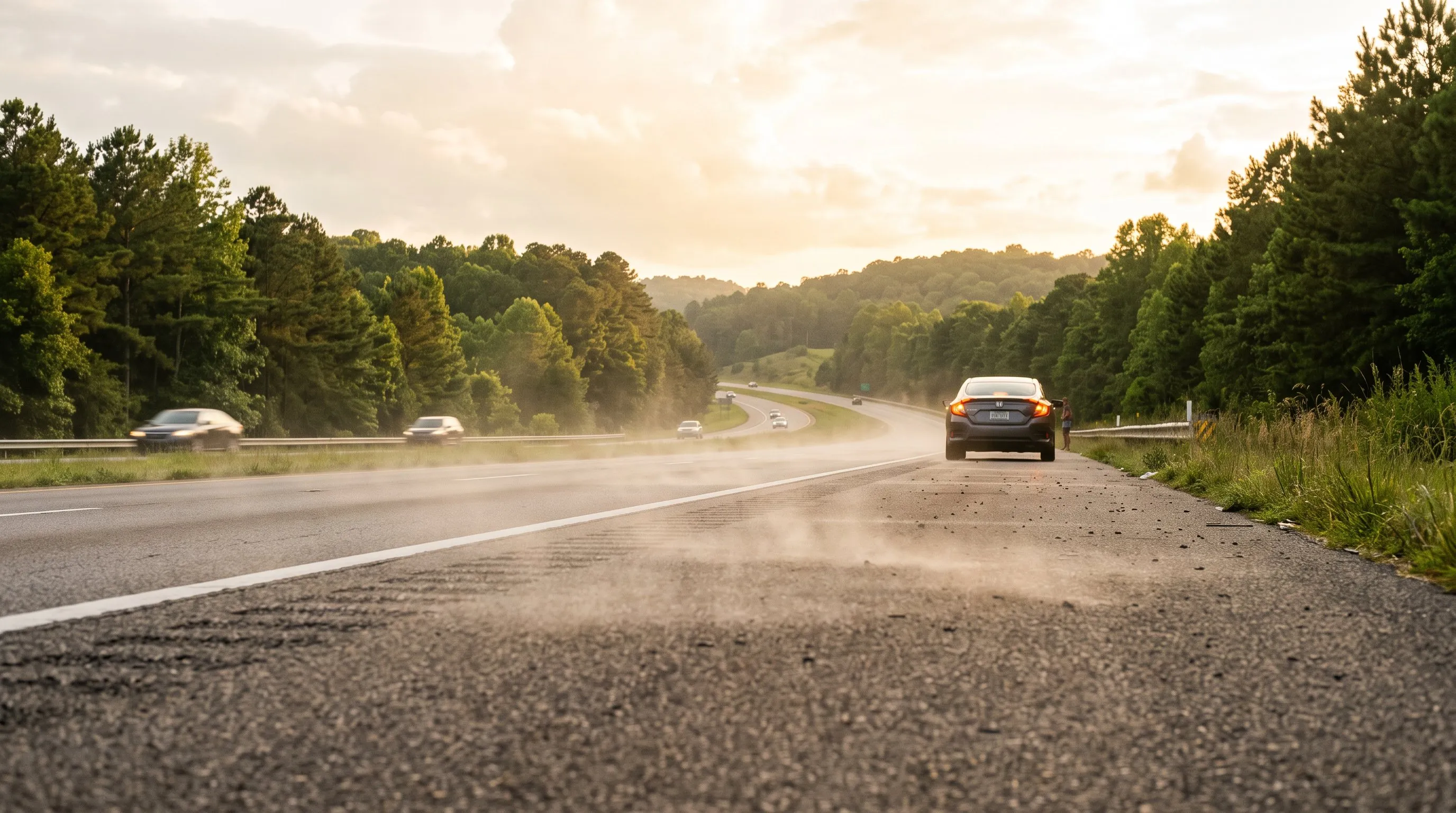
Vehicles stuck on hills and bridges. Bridges and overpasses ice before flat roadway does, because cold air circulates both above and below the deck. A handful of specific hills and bridge overpasses around Mauldin, Simpsonville, and the surrounding area ice up reliably before anything else, and vehicles without good tread or the right driving technique end up stuck or sliding on these spots almost every time.
Collisions from sudden traction loss. Drivers who are not expecting ice, because it looked like a normal wet road, often discover the difference only when they brake or turn and the vehicle does not respond the way it does 350 days a year. This is when our accident recovery service sees its heaviest winter demand.
Preparing your car before the forecast turns
A few simple checks catch most of what causes winter breakdowns here:
- Battery health. If your battery is more than three to four years old, get it tested before winter, not during the first cold snap. A battery that has been quietly weakening will often fail exactly when you need it least.
- Tire tread. Worn tires that handle fine on dry upstate roads lose grip fast on ice. Check tread depth, and if your tires are already borderline, replace them before winter rather than after a close call.
- Wiper fluid rated for freezing temperatures. Standard summer washer fluid can freeze on the windshield in a hard freeze, which is not a repair issue but is a visibility issue at the worst possible moment.
- A basic winter kit. A blanket, a phone charger, and a flashlight in the car cost nothing and matter enormously if you end up stopped on a shoulder waiting for help during a cold snap.
What to do if you get stuck or start sliding
If your vehicle loses traction, ease off the accelerator and brake, and try to steer gently in the direction you want to go rather than overcorrecting. If you end up stopped or stuck on an icy hill or bridge, stay in the vehicle with your seatbelt on and hazards running unless you are in immediate danger, and call for help rather than trying to rock the car free repeatedly on ice, which often just digs the tires in deeper.
Because ice events here are infrequent, we treat them as high-call-volume days and stage extra coverage across Mauldin, Simpsonville, and the surrounding towns when a hard freeze or ice advisory is forecast. If you are stuck, we would rather you call early than wait to see if conditions improve on their own, since they usually do not until temperatures climb well above freezing.
Frequently asked questions
What’s the most common reason cars break down during a cold snap? Battery failure, by far. A battery that’s been quietly weakening all year often fails completely the first genuinely cold morning of the season, and it usually has nothing to do with the ice on the road itself.
Are certain roads more dangerous than others during an ice storm? Yes. Bridges and overpasses ice before flat roadway does, because cold air circulates both above and below the deck. The same spots around Mauldin and Simpsonville ice up first almost every time.
What should I do if my car starts sliding? Ease off the accelerator and brake, and steer gently in the direction you want to go rather than overcorrecting. If you end up stuck, stay in the vehicle with your seatbelt on and hazards running unless you’re in immediate danger.
Will I have to wait longer for a tow during an ice storm? We stage extra coverage across Mauldin, Simpsonville, and the surrounding towns whenever a hard freeze or ice advisory is forecast, specifically because these events spike our call volume. Call early rather than waiting to see if conditions improve.
The bottom line for upstate drivers: the danger with ice here is not that it is worse than anywhere else, it is that everyone, drivers and road crews alike, gets less practice handling it. A little preparation before the next cold snap closes that gap.